

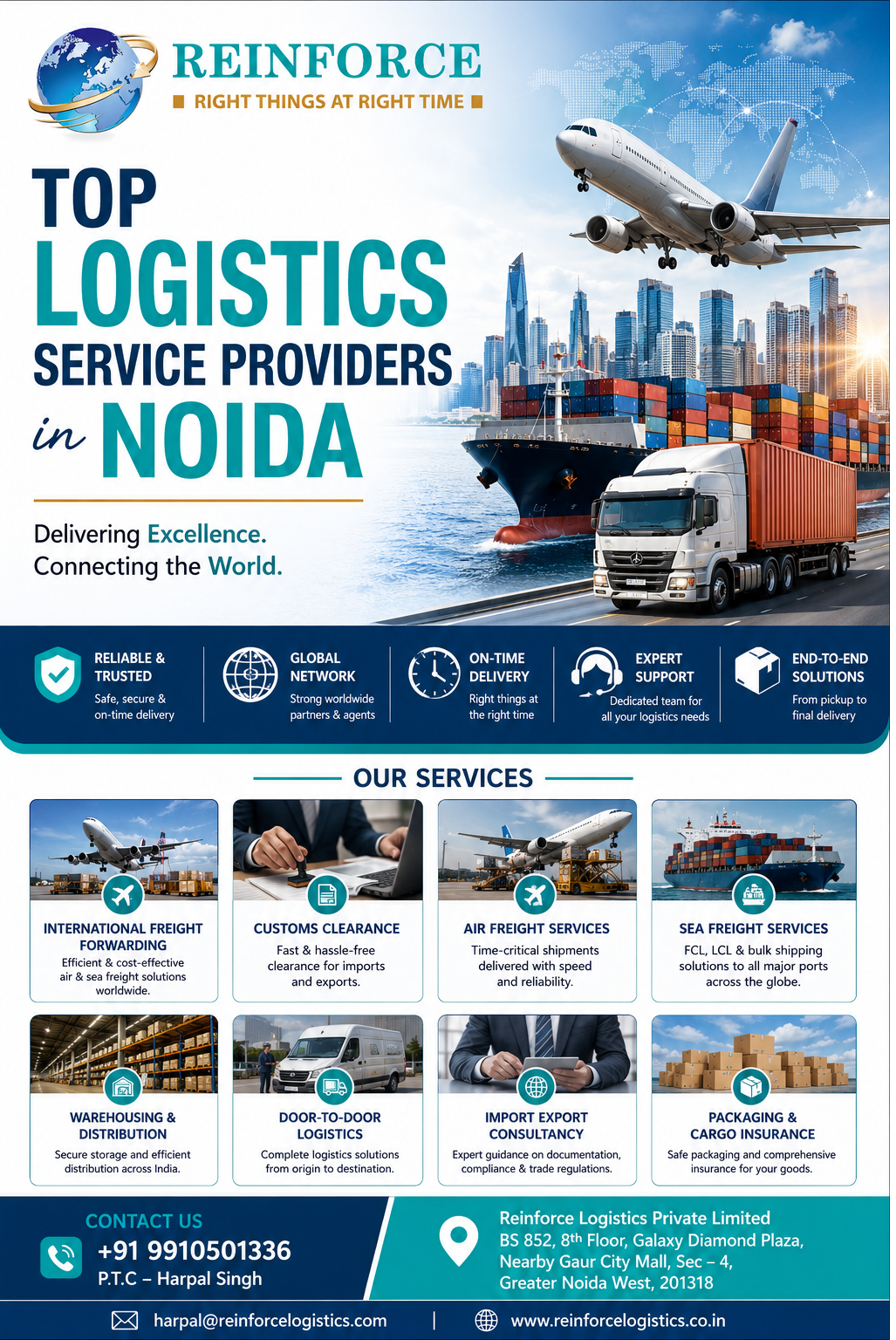
How to Compare Logistics Service Providers in Noida
When businesses search for the top logistics service providers in Noida, they often compare quotations first.
Price is important, but it should not be the only deciding factor.
A better evaluation considers:
- Service coverage
- International freight experience
- Customs clearance capability
- Trade-lane knowledge
- Industry experience
- Delivery performance
- Documentation support
- Communication
- Shipment visibility
- Pricing transparency
- Door-to-door capability
- Pan India network
- Overseas coordination
A company offering the cheapest freight rate may not necessarily provide the lowest overall logistics cost.
Example
Suppose Company A quotes:
₹75,000
and Company B quotes:
₹82,000
At first glance, Company A appears cheaper.
But after checking the quotations, you discover that Company A excludes:
- Origin handling
- Documentation
- Customs-related charges
- Destination handling
- Local delivery
Company B has included most of these costs.
The apparent ₹7,000 saving may disappear when the complete shipment cost is calculated.
The correct comparison
Instead of comparing only:
Freight Rate
compare:
Freight + Handling + Customs + Transportation + Documentation + Storage + Other Applicable Charges = Total Logistics Cost
CTA: Always request a written quotation with clear inclusions, exclusions, validity and payment terms before comparing logistics providers.
Freight Rate vs Total Landed Logistics Cost
One of the most important concepts for importers and exporters is the difference between freight cost and total landed cost.
Freight is only one component.
For an imported shipment, the overall cost can potentially include:
- Product purchase price
- International freight
- Insurance
- Origin charges
- Port or airport handling
- Customs-related charges
- Duties and taxes
- Transportation
- Warehousing
- Delivery
- Demurrage or storage where applicable
- Documentation
- Other shipment-specific expenses
Not every charge applies to every shipment.
Therefore, businesses should ask the logistics provider for a clear cost structure.
Why this matters for manufacturers
Imagine a manufacturing company imports raw materials every month.
A difference of ₹5,000 per shipment may appear insignificant.
But if the company imports 20 shipments every month:
₹5,000 × 20 = ₹1,00,000 per month
That becomes:
₹12,00,000 per year
This simple example shows why logistics cost management matters at scale.
CTA: If your company ships regularly, review your annual logistics spend instead of evaluating every shipment only on its individual freight rate.
How Freight Forwarding Services Support International Trade
Freight forwarding is the coordination layer between the shipper, carrier and other logistics stakeholders.
A freight forwarder may coordinate:
Shipper → Pickup → Origin Handling → Carrier → Destination Handling → Customs → Delivery
Depending on the service model, the forwarder may also coordinate documentation, consolidation, warehousing and overseas delivery.
For businesses in Noida, this can be particularly useful because international shipments often involve several transportation stages.
Example: Export from Noida to the USA
A Noida engineering company exports machine components to a customer in the United States.
A typical logistics process could include:
- Cargo pickup from Noida
- Export documentation
- Cargo handling
- Freight booking
- Export customs clearance
- Air or sea transportation
- Destination coordination
- Import clearance at destination
- Local delivery
The exact process depends on the agreed commercial terms, destination requirements and shipment type.
A professional freight forwarder coordinates these activities and keeps the exporter informed.
Customs Clearance: A Critical Part of International Logistics
Customs clearance is not simply a formality.
It is an important compliance and operational stage of international trade.
India's customs system uses electronic processes and platforms to facilitate trade. ICEGATE provides electronic services for customs-related filing and information for trade stakeholders. (icegate.gov.in)
A logistics company involved in customs coordination should understand the importance of accurate shipment information.
Common documents involved in international shipments
Depending on the transaction and commodity, documentation can include:
- Commercial Invoice
- Packing List
- Bill of Lading
- Air Waybill
- Shipping Bill
- Bill of Entry
- Importer Exporter Code
- Certificate of Origin
- Product-specific certificates
- Licences or permissions where applicable
- Other regulatory documents
The exact documentation depends on the product, country, transaction structure and applicable regulations.
Why documentation accuracy matters
A simple mismatch can create questions.
For example:
- Invoice description differs from packing list
- Quantity does not match
- Weight differs between documents
- Product description is incomplete
- Required supporting documents are missing
These issues can result in additional processing and potential delays.
A professional logistics provider should review the shipment information early and communicate any obvious documentation gaps.
CTA: Send your commercial invoice, packing list and cargo details to your logistics partner before shipment departure whenever possible.
Air Freight vs Sea Freight: Which Is Better?
There is no universally better transportation mode.
The right choice depends on the shipment.
FactorAir FreightSea FreightTransit SpeedFasterSlowerTypical CostHigherLower for larger volumesBest ForUrgent cargoLarger/non-urgent cargoCargo VolumeSmall to mediumMedium to very largeUrgent Spare PartsExcellentUsually unsuitableHeavy MachineryPossible, subject to aircraft limitsOften suitableHigh-Value GoodsOften suitableDepends on cargoLarge Commercial ShipmentsCan become expensiveOften economicalPlanning RequirementModerateHigherLCL AvailabilityAir consolidation optionsCommonFCLNot applicable in the sea-container senseYes
Choose air freight when:
- Delivery is urgent
- Cargo has high value relative to weight
- Production depends on quick delivery
- Customer deadline is critical
- Shipment volume is manageable
Choose sea freight when:
- Cargo volume is large
- Delivery time permits ocean transit
- Cost efficiency is important
- Machinery or heavy cargo is involved
- Regular commercial shipments are planned
Expert Tip: Do not compare air and sea freight using freight price alone. Compare the cost of transportation against the financial impact of delayed inventory, production or customer delivery.
LCL vs FCL: Understanding the Difference
For ocean shipments, choosing between LCL and FCL can significantly affect cost and handling.
LCL – Less than Container Load
LCL allows businesses to ship cargo without occupying an entire container.
It is often considered when:
- Shipment volume is relatively small
- The business does not require a full container
- Shipment frequency is manageable
- Consolidation is available
FCL – Full Container Load
FCL uses a complete container for the shipment.
It can be suitable when:
- Cargo volume is high
- The shipper wants dedicated container space
- Cargo handling needs to be minimized
- Full-container economics are favorable
Example
An importer has 4 CBM of cargo from China.
Booking an entire container may not be economical.
An LCL shipment could be considered.
Another importer has 28 CBM of regular cargo.
Depending on container type, route and rates, FCL may be commercially more appropriate.
The exact decision should be based on current freight rates, cargo characteristics, origin/destination charges and delivery requirements.
CTA: Ask your freight forwarder to compare LCL and FCL using the complete shipment cost rather than only the ocean freight rate.
Import Logistics from China to India
China is an important sourcing market for many Indian businesses.
Noida and Delhi NCR companies may import:
- Electronics
- Machinery
- Components
- Electrical products
- Industrial equipment
- Packaging material
- Consumer goods
- Textile products
- Automobile components
- Manufacturing inputs
A typical China-to-India shipment may involve:
Chinese Supplier → Pickup → Export Clearance → Consolidation → Sea/Air Freight → Indian Customs → Delivery to Noida
Important planning considerations
Before booking, the importer should establish:
- Exact product description
- Quantity
- Weight
- Dimensions
- Country of origin
- HS classification
- Commercial value
- Incoterm
- Port/airport of loading
- Indian destination
- Required delivery date
- Import documentation
Example
A Greater Noida manufacturer purchases production components from a supplier in Shenzhen.
The importer should not ask only:
'What is the China-to-India freight rate?'
A better question is:
'What will be my complete logistics cost from the supplier's location to my factory in Greater Noida?'
That approach produces a more useful commercial decision.
CTA: For China-to-India shipments, request an end-to-end quotation covering origin, international freight, customs coordination and final delivery.
Export Freight Services from India to the USA
The USA is a major destination for Indian exporters across several industries.
Businesses exporting from Delhi NCR may include:
- Engineering companies
- Textile exporters
- Garment manufacturers
- Handicraft businesses
- Pharmaceutical companies
- Auto-component suppliers
- Industrial product manufacturers
- E-commerce exporters
An India-to-USA shipment may require:
Factory Pickup → Export Documentation → Customs → Air/Sea Freight → Destination Coordination → Import Clearance → Final Delivery
The logistics provider should help the exporter understand the shipment timeline and documentation requirements.
Example: Engineering exporter
A Noida manufacturer exports precision components to a US customer.
The exporter needs:
- Correct packaging
- Commercial invoice
- Packing list
- Shipping documentation
- Export customs coordination
- Suitable freight mode
- Destination arrangements
If the buyer has a strict delivery deadline, the exporter should plan the shipment backward from the required delivery date.
CTA: For USA exports, share your product details and delivery deadline early so the logistics provider can recommend an appropriate shipping plan.
Logistics Requirements for Different Industries
The best logistics provider for one industry may not be the best provider for another.
Pharmaceutical Companies
Pharmaceutical logistics may require special attention to:
- Product sensitivity
- Packaging
- Temperature requirements where applicable
- Documentation
- Transit time
- Regulatory requirements
For time-sensitive products, shipment planning becomes particularly important.
Textile Exporters
Textile exporters often require:
- Regular shipments
- LCL/FCL
- Air freight for urgent orders
- Export documentation
- Buyer-specific requirements
- Consolidation
- International delivery
A logistics partner with experience in textile exports can help establish repeatable shipping processes.
Engineering Companies
Engineering businesses may ship:
- Machinery
- Components
- Spare parts
- Industrial equipment
- Heavy cargo
Their logistics requirements may involve:
- Dimensions
- Weight
- Packaging
- Special handling
- Container selection
- Delivery equipment
Automobile Industry
Automobile manufacturers and component suppliers may require:
- Regular scheduled shipments
- Spare-parts logistics
- Import components
- Export components
- Time-sensitive delivery
- Inventory coordination
For these businesses, shipment reliability can be as important as freight price.
Chemical Exporters and Importers
Chemical cargo may require special consideration depending on its classification and applicable regulations.
Businesses should clearly communicate:
- Product name
- Chemical composition where relevant
- Safety information
- Classification
- Packaging
- Quantity
- Destination
A logistics provider should confirm whether it can handle the specific commodity before accepting the shipment.
E-commerce Sellers
International e-commerce businesses may require:
- International courier
- Door-to-door shipping
- Shipment tracking
- Commercial documentation
- Returns coordination
- Destination customs support
- Small shipment handling
For e-commerce sellers, customer experience can depend heavily on predictable delivery.
CTA: Choose a logistics partner with experience in your specific industry and cargo type rather than selecting a provider solely on general market reputation.
How Warehousing Fits into Logistics
Warehousing is an important component of an integrated logistics strategy.
A business may require storage:
- Before export
- After import
- During distribution
- Between production and dispatch
- During shipment consolidation
- Before final delivery
For example, a distributor importing goods into India may not want every shipment delivered immediately to individual customers.
Instead, goods can be moved to a warehouse and distributed according to customer orders.
This can provide greater control over inventory movement.
Warehousing services may include:
- Storage
- Receiving
- Dispatch
- Consolidation
- Deconsolidation
- Inventory coordination
- Packing
- Labelling
- Distribution support
The actual services depend on the facility and agreement.
CTA: If your business frequently stores, consolidates or redistributes imported or exported goods, consider integrating warehousing into your logistics strategy.
Door-to-Door vs Port-to-Port Logistics
Businesses should understand the difference between these service models.
Service ModelWhat It Usually MeansBest ForPort-to-PortMain international transportation between gatewaysExperienced shippersAirport-to-AirportAir cargo between airportsTime-sensitive commercial cargoDoor-to-PortOrigin pickup to destination gatewayExporters/importers with destination arrangementsPort-to-DoorDestination gateway to final addressImporters with local delivery needsDoor-to-DoorOrigin address to destination addressBusinesses wanting end-to-end coordination
The exact scope varies by quotation.
A business should ask:
'What exactly is included in your door-to-door rate?'
This question can prevent misunderstandings about local charges, customs duties, taxes, delivery and handling.
Common Mistakes When Selecting a Logistics Provider
1. Selecting the Cheapest Quotation
A low headline rate can hide additional charges.
Solution: Compare the complete cost.
2. Ignoring Transit Time
A cheaper service may take considerably longer.
Solution: Compare price and delivery requirement together.
3. Not Confirming Incoterms
Incoterms determine responsibilities between buyer and seller for transportation, risk and certain costs.
Solution: Confirm the agreed Incoterm before requesting the logistics quotation.
4. Giving Incomplete Cargo Information
Freight rates can depend on:
- Weight
- Dimensions
- Commodity
- Origin
- Destination
- Mode
- Packaging
Solution: Provide accurate cargo information before quotation.
5. Not Asking About Rate Validity
International freight rates can change according to carrier schedules, market conditions and other factors.
Solution: Always confirm the validity period in writing.
6. Ignoring Local Charges
International freight may not include every origin or destination charge.
Solution: Request an itemized quotation.
7. Poor Shipment Planning
Last-minute bookings can create unnecessary pressure and potentially higher costs.
Solution: Plan shipments according to production and customer schedules.
8. Choosing a Provider Without Industry Knowledge
Different products have different requirements.
Solution: Ask about experience with your commodity and industry.
Expert Tips for Importers and Exporters
Tip 1: Give Complete Shipment Information
A professional quotation requires accurate information.
Provide:
- Origin
- Destination
- Commodity
- Number of packages
- Gross weight
- Dimensions
- Cargo value
- Preferred shipping mode
- Required delivery date
Tip 2: Ask for Multiple Freight Options
Instead of asking:
'Give me your best rate.'
ask:
'Please provide the most economical, fastest and recommended options.'
This allows the logistics provider to explain the trade-offs.
Tip 3: Separate Freight from Other Charges
Ask the provider to identify:
- International freight
- Origin charges
- Destination charges
- Customs clearance
- Transportation
- Documentation
- Storage
- Taxes/duties where applicable
This makes quotation comparison easier.
Tip 4: Use Written Communication
Important commercial points should be confirmed in writing.
This includes:
- Rate
- Validity
- Payment terms
- Transit time
- Service scope
- Delivery terms
- Special conditions
Tip 5: Review Logistics Performance Regularly
For regular customers, measure:
- Shipment count
- Average transit time
- Customs clearance time
- On-time delivery
- Freight cost
- Unexpected charges
- Claims/damage
- Communication quality
This creates a measurable logistics-management process.
CTA: If your business ships regularly, ask your logistics provider for a monthly or quarterly performance review.
Why Reinforce Logistics Can Be a Valuable Logistics Partner
Reinforce Logistics Private Limited serves businesses from its Delhi NCR base with international freight forwarding and logistics solutions.
Its service portfolio covers several key requirements that importers and exporters may need:
International Freight Forwarding
Coordination of air and sea shipments for international cargo.
Customs Clearance
Support for import and export customs processes through appropriate channels.
Air Freight
Solutions for urgent, time-sensitive and commercially important cargo.
Sea Freight
Support for LCL, FCL and other ocean-freight requirements.
Import-Export Logistics
Coordination of international cargo movement for businesses buying and selling across borders.
Door-to-Door Logistics
Integrated cargo movement from origin to final destination, subject to the agreed service scope.
Warehousing
Storage and logistics support for businesses requiring inventory handling and distribution.
Freight Consultancy
Practical guidance on shipment planning, freight modes, routing and logistics cost considerations.
Delhi NCR Headquarters and Pan India Operations
For a Noida-based business, proximity and regional knowledge can be useful.
Reinforce Logistics is headquartered in Delhi NCR and supports customers across Noida, Greater Noida and the wider NCR business ecosystem.
At the same time, businesses increasingly operate across multiple Indian states.
A manufacturer may have:
- Factory in Noida
- Supplier in Gujarat
- Warehouse in Maharashtra
- Customer in Karnataka
- Overseas buyer in the USA
A logistics provider therefore needs to support more than one city.
Through its operational and partner network, Reinforce Logistics can coordinate logistics requirements across India and international trade lanes.
The objective is simple:
One logistics relationship. Multiple shipment requirements. Better coordination.
CTA: If your supply chain extends beyond Noida, discuss your Pan India and international logistics requirements with Reinforce Logistics.
Practical Checklist for Selecting a Logistics Service Provider
Before appointing a logistics company, use this checklist:
- International freight forwarding available
- Air freight available
- Sea freight available
- LCL service available
- FCL service available
- Import customs clearance support
- Export customs clearance support
- Door-to-door logistics available
- Warehousing support available
- Pan India transportation network
- Overseas partner network
- Experience with your industry
- Experience with your destination
- Written quotation
- Rate validity clearly mentioned
- Included and excluded charges identified
- Transit time mentioned
- Shipment tracking/update process
- Clear escalation process
- Payment terms clearly communicated
A provider that meets these criteria is generally better positioned to support a business with recurring logistics requirements.
People Also Ask: Logistics Services in Noida
Which company provides freight forwarding services in Noida?
Several freight forwarding companies serve Noida and Delhi NCR. Businesses should compare their international network, customs capabilities, freight modes, service scope, pricing transparency and experience with the relevant cargo.
Which is better for international shipping: freight forwarder or courier?
Courier services are often suitable for smaller and time-sensitive parcels, while freight forwarders are generally more appropriate for larger commercial shipments, LCL/FCL cargo and complex import-export logistics.
Can a freight forwarder arrange customs clearance?
Yes, many freight forwarders provide or coordinate customs clearance services as part of an integrated shipment.
What is the benefit of using one logistics provider?
Using one logistics provider can simplify communication, reduce vendor coordination and provide a central point for shipment planning and tracking.
How do I reduce import freight costs?
Review shipment consolidation, transportation mode, routing, carrier options, shipment frequency and total landed cost. Accurate documentation can also help reduce avoidable delays and additional expenses.
Find the top logistics service providers in Noida for freight forwarding, customs clearance, air and sea freight, import-export and door-to-door logistics.